IBM Product Discovery
Designing a clearer path for customers to navigate and explore IBM’s product ecosystem.
Timeline
May - August 2025
Team
IBM.com
Role
Information Architecture Intern
Tools
Figma, AEM, Miro, Jira
🔒 Although the project is live, I can only share selected aspects of the project here due to NDA. I’m happy to discuss things further if you’d like to learn more!
LONG STORY SHORT
I worked on product discovery from the inside out.
IBM has an enormous product ecosystem. But helping someone find the right product isn't only a navigation problem.
During my internship, I learned to think about product discovery beyond the interface. Considering both how information is organized and how customers eventually navigate it.
This project contains two parts:
Exploring Information Structure
Part of my internship focused on metadata and taxonomy, helping me understand how information structure can influence customer-facing experiences.
Simplifying product discovery on IBM.com
I contributed to a category-page experience that gives customers another way to browse and explore IBM's product ecosystem.
MY ROLE
As an Information Architecture Intern, I helped shape the information architecture and page structure for how customers move from broad product categories to individual offerings. I collaborated with information architects, UX researchers, content strategists, designers, and web strategists throughout the project.
OPPORTUNITY
How should customers explore a product ecosystem this large?
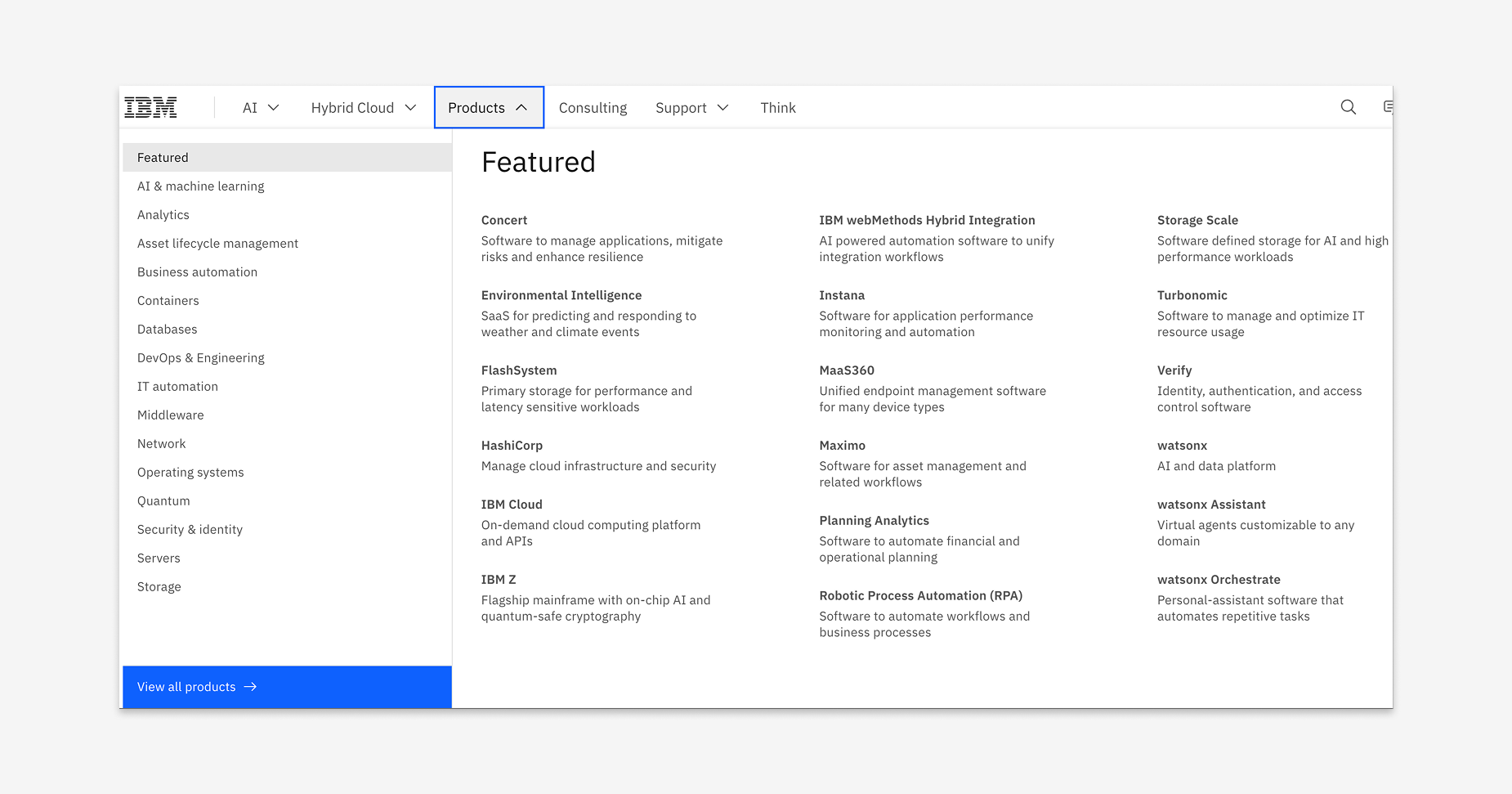
IBM's global navigation is the starting point for discovering products. But navigation menus often has limited space while the product ecosystem extends much further, which leads the customer wondering if this is all IBM has to offer.
That led to a simple question:
How might we create a clearer path from broad product categories to individual products?
DESIGNING FOR DISCOVERY
The navigation is only the beginning of discovery, not the whole experience
I approached the experience as a progression, giving customers enough information to make one decision at a time.

SIMPLIFYING THE NAVIGATION
Fewer categories make the first step easier to scan
The previous navigation surfaced a large number of categories at once. Hick’s Law suggests that decision-making becomes more difficult as the number of choices increases, so the new experience reduces the number of top-level categories
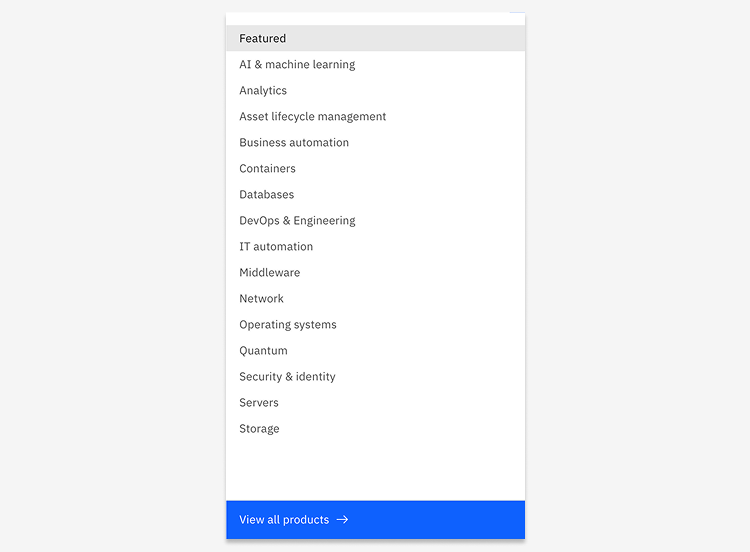
Before
So many choices from the start
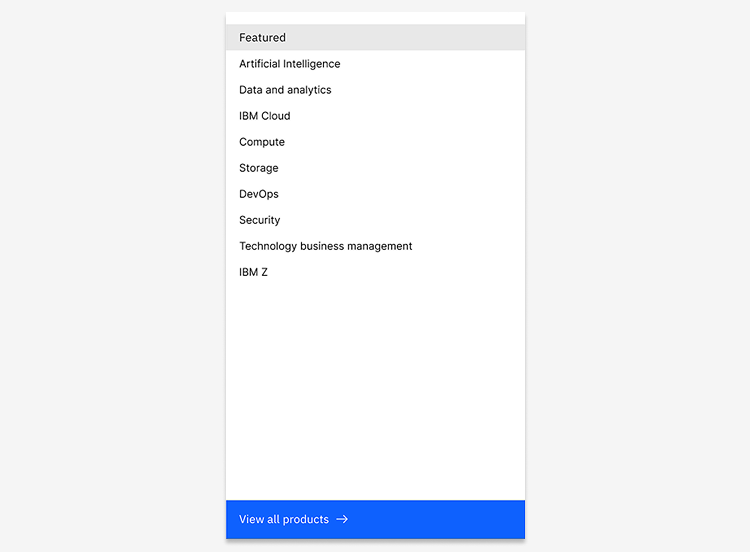
After
Broader categories, deeper exploration
DESIGNING THE CATEGORY EXPERIENCE
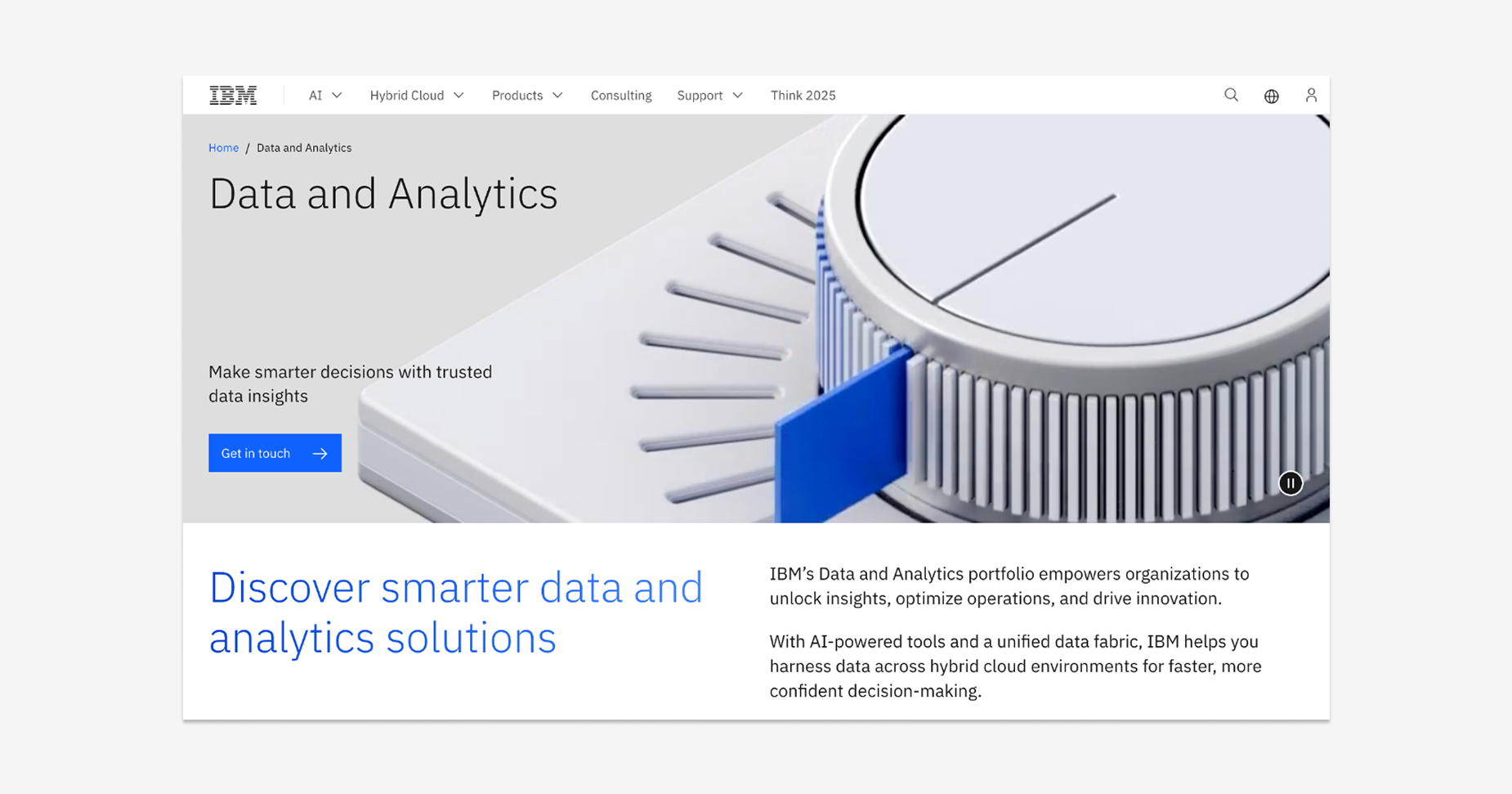
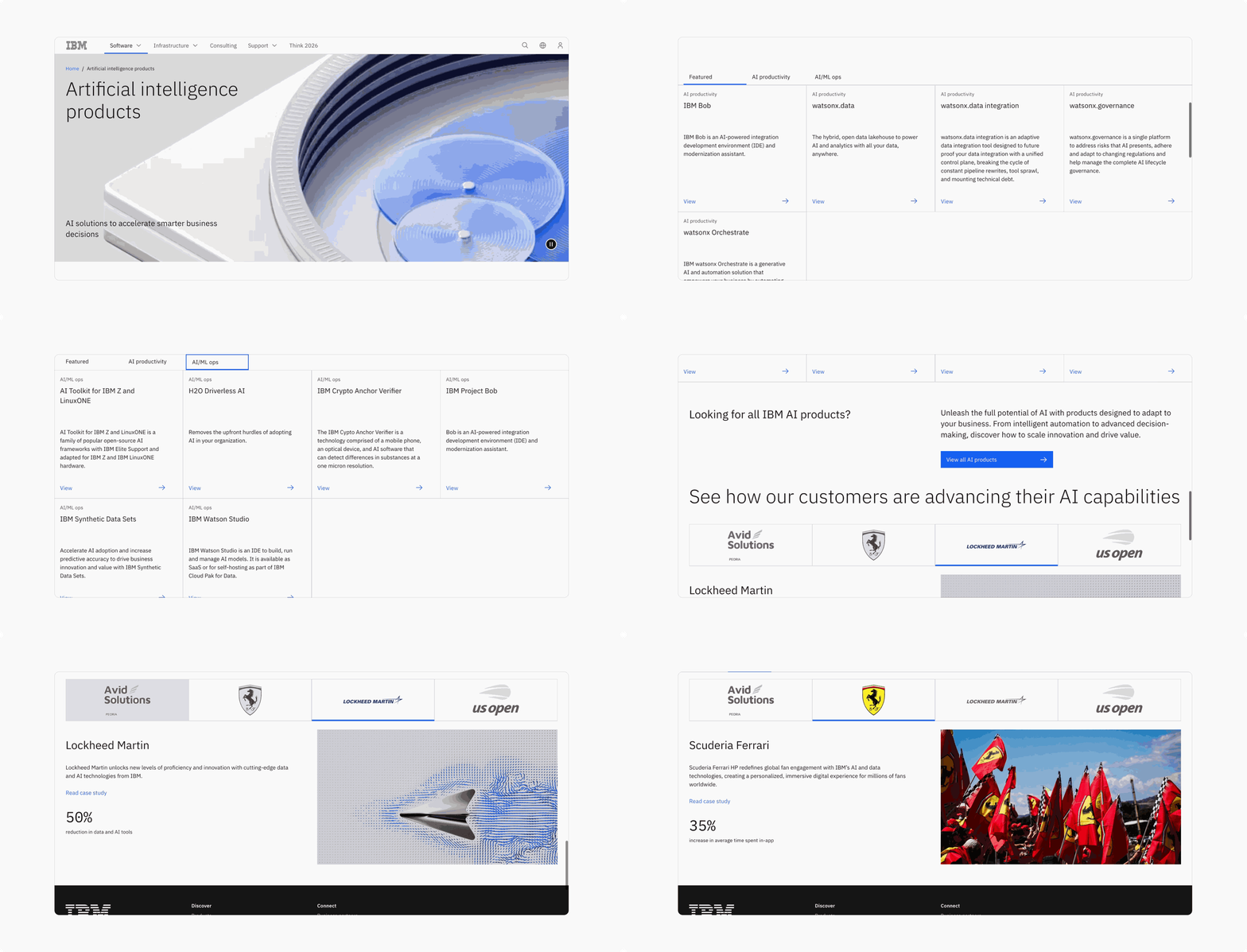
Lead Space
Establishes context of the page before customers begin exploring.
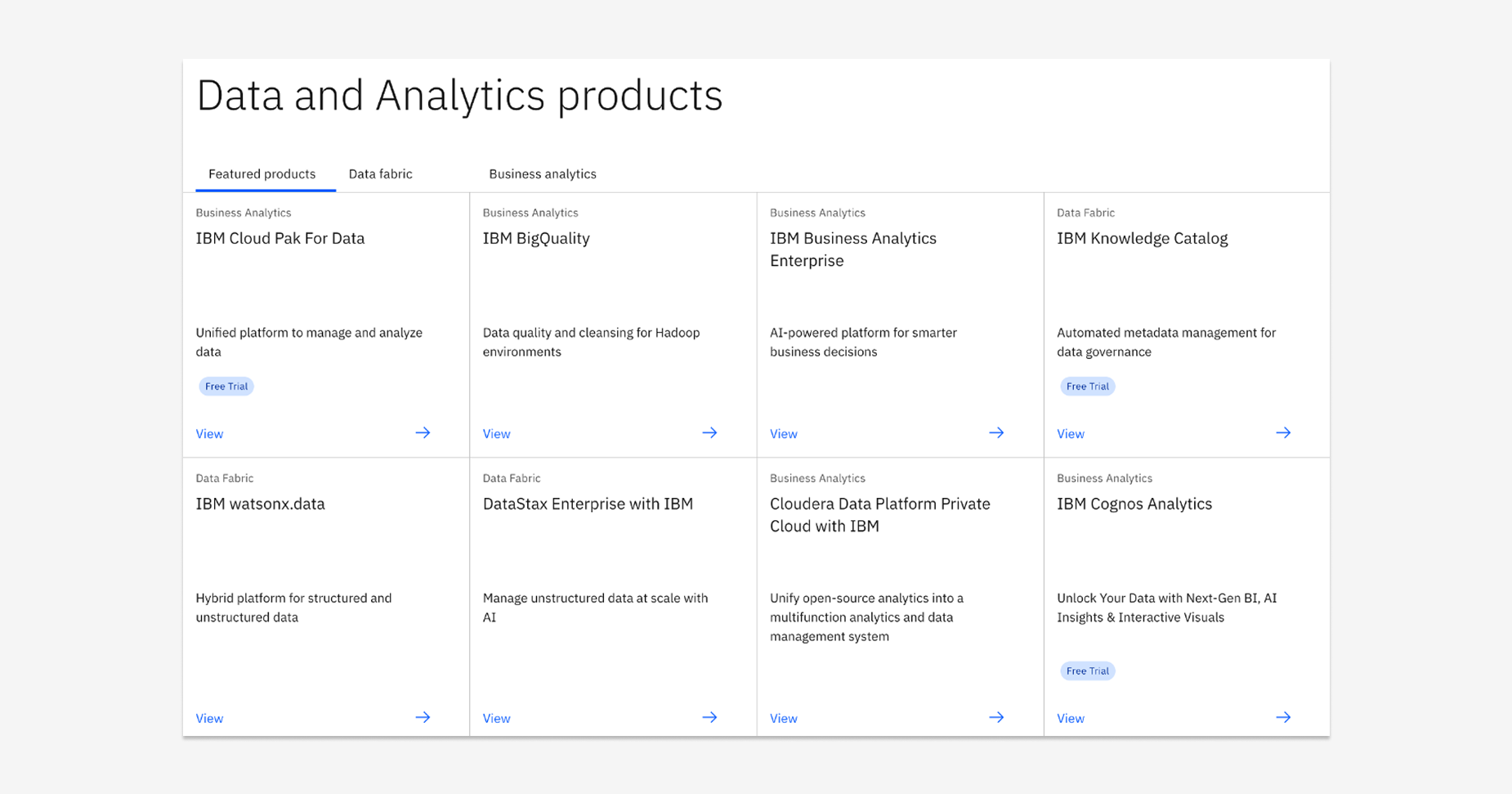
Subcategory Filters
Help customers narrow a broad category into more relevant offerings, making the product set easier to browse.
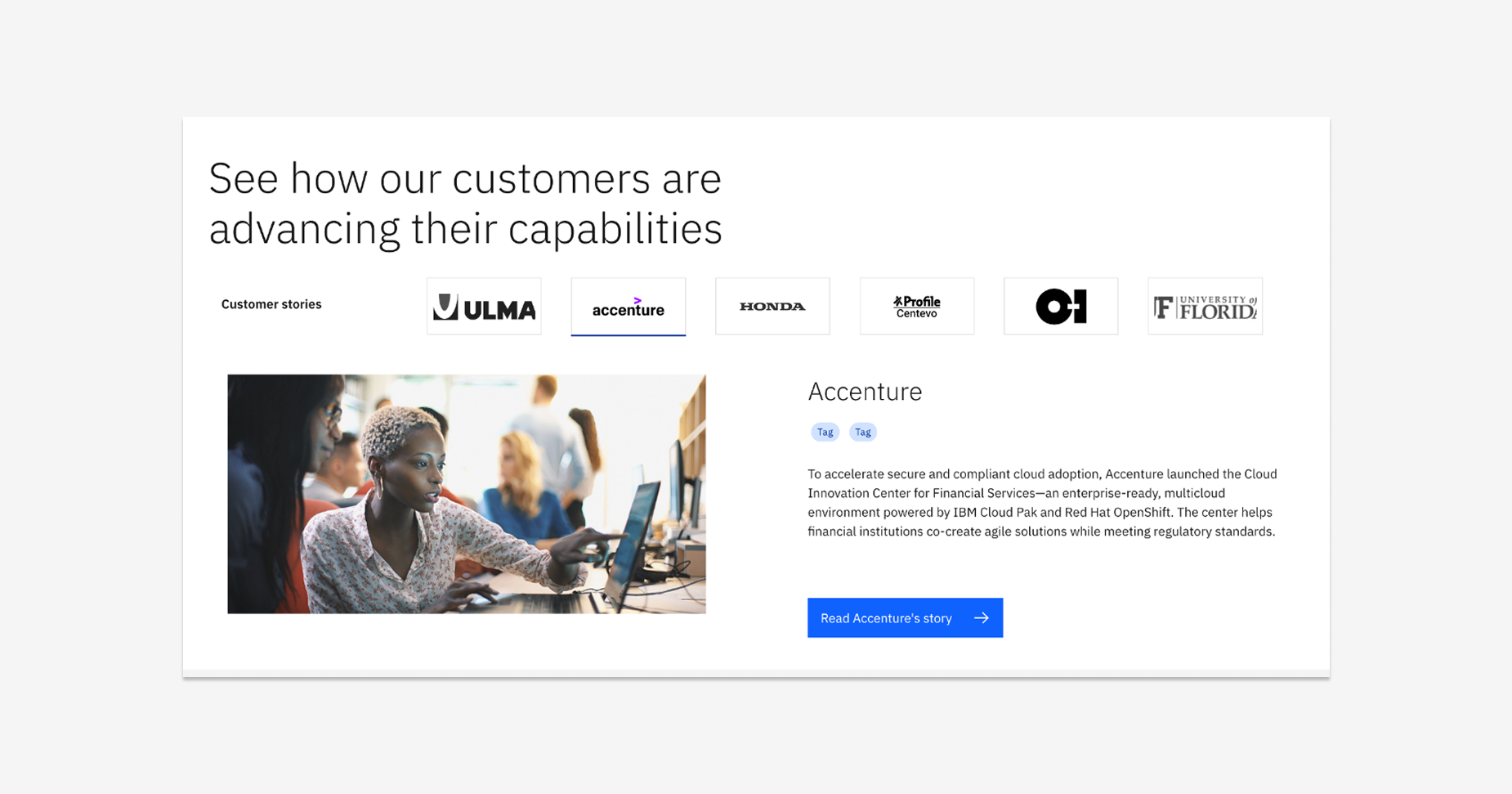
Customer Stories
Connects IBM’s products to real-world outcomes, helping visitors understand how IBM’s products create value for other organizations.
REFLECTION
Thinking beyond the interface
Before this internship, I thought information architecture mostly involved navigation and page structure. Working across different parts of product discovery showed me how much of the customer experience is shaped by the way information is organized before it ever reaches the interface.
Designing with constraints
Working on a large, established product ecosystem taught me that design rarely starts with a blank canvas. I learned to work within existing structures and constraints while still finding opportunities to make innovative experiences.